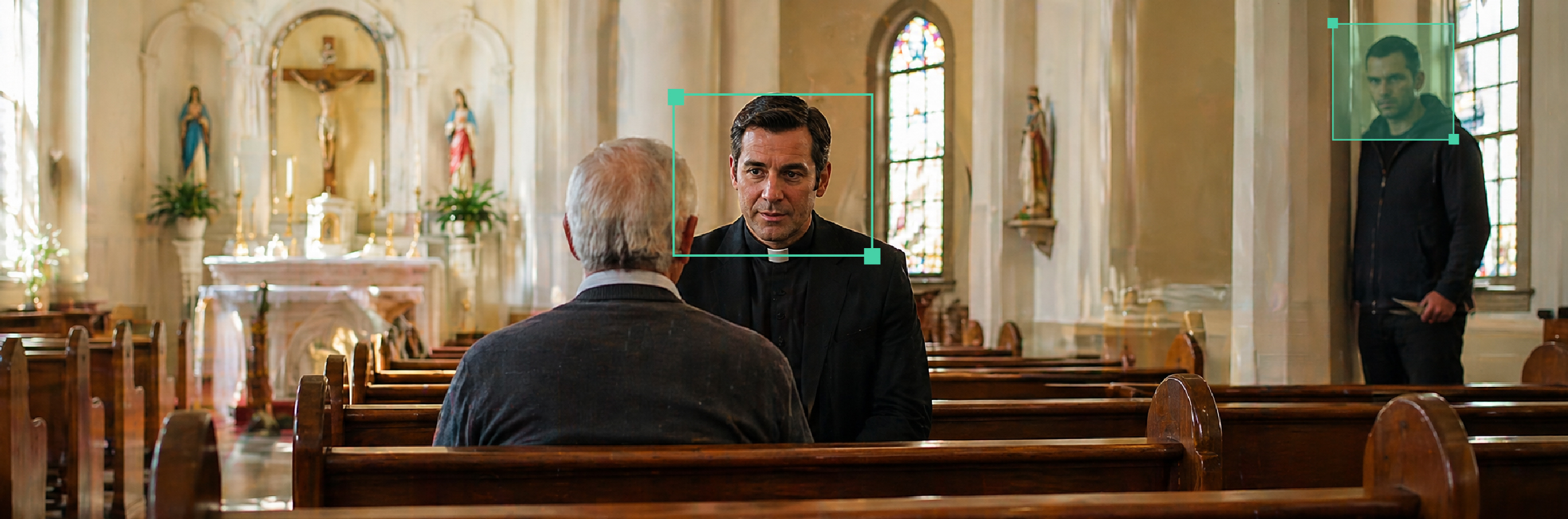
Churches are built on a foundation of openness. Doors are meant to be unlocked. New faces are welcomed without hesitation. The environment is designed to be accessible, not controlled. But from a security perspective, that openness introduces inherent vulnerabilities.
Multiple entry points, minimal friction at access, and a steady flow of unfamiliar visitors make it difficult to distinguish between normal and abnormal behavior. Unlike more controlled environments, there are fewer natural barriers to entry—and fewer opportunities to assess intent before someone is already inside.
This creates a structural challenge: how to maintain a welcoming atmosphere while still ensuring meaningful protection. Adding visible security can change the tone of the space, but relying solely on passive measures leaves gaps—especially when threats develop outside the building before ever arriving.
A more effective approach focuses on layered, intelligence-driven protection that operates beyond what’s visible. Monitoring for early indicators, understanding patterns of behavior, and maintaining awareness of potential threats before they reach the premises allows churches to preserve their openness without compromising safety.
Because the goal isn’t to close the doors—it’s to ensure that what comes through them has already been seen.