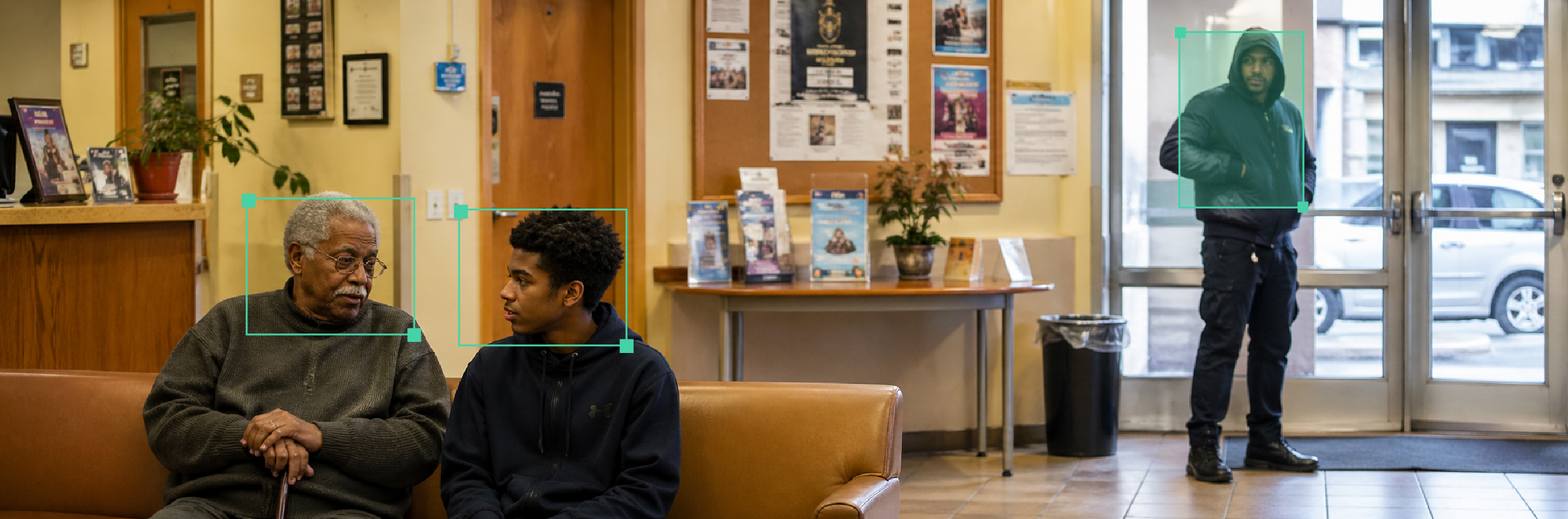
Community centers are busiest during after-school hours—when children arrive, programs begin, and staff are managing multiple responsibilities at once. It’s also one of the most vulnerable times of day.
High volume, constant transitions, and a mix of known and unknown individuals make it difficult to maintain clear oversight. Entry points are often more relaxed, and attention is focused on operations rather than security. For someone looking to enter unnoticed, this environment creates opportunity.
To reduce risk during these peak hours, community centers should focus on:
- Defined entry control during peak flow times — ensure there is always a clear, monitored point of entry, even during high traffic periods
- Staff role clarity — assign specific individuals to oversee entry points so security isn’t diluted across multiple responsibilities
- Visitor awareness protocols — establish a consistent way to identify unfamiliar individuals without disrupting the environment
- Behavioral awareness training — help staff recognize unusual patterns such as loitering, repeated entry attempts, or agitation after denial
- Post-denial monitoring — track and document individuals who are turned away in case of return attempts
Effective protection during these hours requires more than presence—it requires awareness beyond the building. Monitoring for early indicators, understanding patterns of behavior, and maintaining visibility into potential risks allows centers to stay ahead during their most active—and most exposed—times.
Earlier that day, the same individual had attempted to enter the facility and was denied access because he was not a member. He left—but then returned. At that point, there was no system in place to track or flag the earlier interaction, no escalation, and no continued awareness of a potential risk. When he came back, he was able to re-enter the environment and carry out the attack.
This highlights a critical gap in how most community centers operate. Denying entry is often treated as a resolution—but in reality, it can be the beginning of escalation. Individuals who are turned away, especially if agitated, don’t always disengage. Without a way to monitor behavior beyond that moment or connect it to future activity, the threat remains active but unseen.
In this case, the attacker had a prior criminal history and later indicated continued intent to harm others. The warning signs weren’t limited to the moment of entry—they existed before, and they continued after. But without a system to capture, connect, and act on those signals, the opportunity to intervene was missed.
The takeaway is clear: access control alone is not protection. Knowing who was turned away, why, and what happens next is just as important as knowing who comes in. Because in many cases, the real risk isn’t the person who gets inside—it’s the one who leaves and comes back.