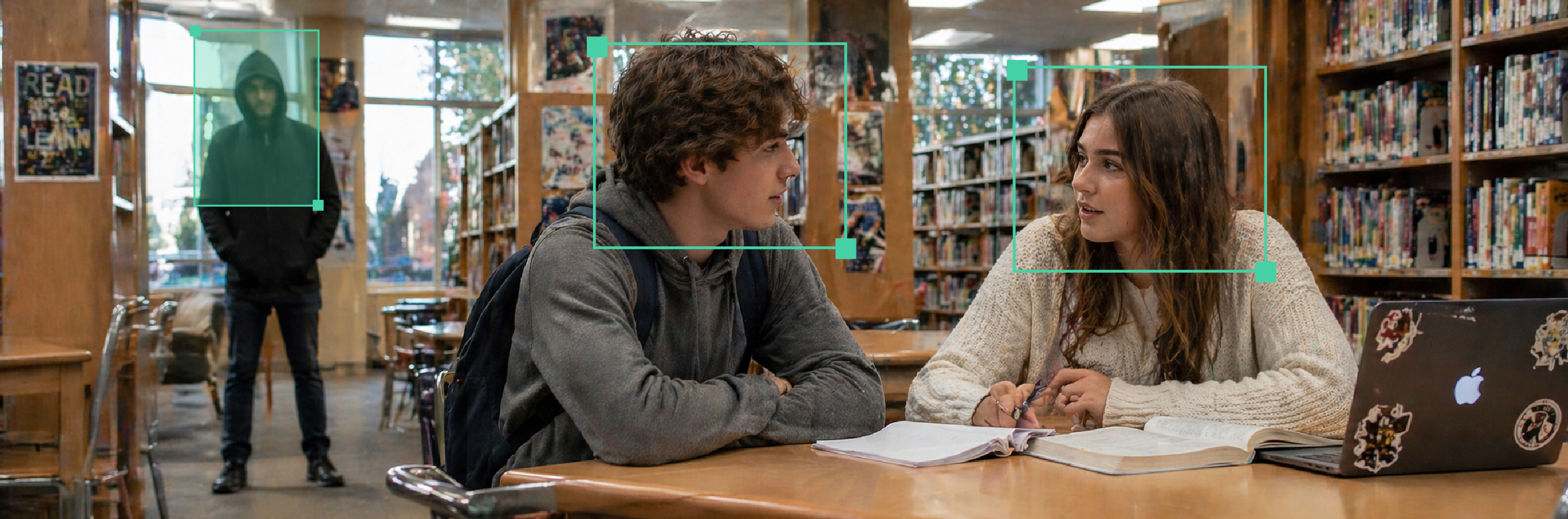
While no single system can eliminate the risk of violence on college campuses, recent data and security research suggest that proactive monitoring and early intervention systems are associated with measurable reductions in escalation and response gaps.
Across higher education institutions in the U.S., most incidents are not the result of spontaneous events—they are preceded by identifiable signals. Research into campus safety and firearm violence consistently highlights that many threats involve prior behavioral indicators, online activity, or interpersonal conflicts that develop over time rather than appearing suddenly.
At the same time, campuses that have invested in layered security approaches—combining physical security, anonymous reporting tools, and real-time monitoring systems—have reported improved early detection capabilities and faster intervention timelines. According to public health and safety research, more than 60% of states now use anonymous reporting systems or digital tip lines designed specifically to surface early warning signs before incidents escalate.
These systems are designed to shift security from reactive response to early identification. Instead of relying solely on physical security presence after an incident begins, they aim to capture behavioral signals—such as threatening communications, reported concerns, or suspicious planning activity—before an event occurs.
Studies and institutional reports on campus safety consistently show that perception of security and actual incident severity are both influenced by how early threats are identified and addressed. While campuses with proactive systems do not eliminate risk entirely, they are better positioned to disrupt escalation chains before they reach a critical stage.
More broadly, the trend in higher education security is moving toward integrated monitoring models—combining digital reporting, behavioral analysis, and environmental awareness. These systems are increasingly viewed as part of a layered prevention strategy rather than standalone tools.
The data does not suggest a simple cause-and-effect reduction in incidents solely from monitoring systems. However, it does indicate a clear shift: institutions with proactive detection and reporting infrastructure are improving their ability to identify risks earlier, respond faster, and reduce blind spots in campus safety operations.
In a landscape where most threats evolve over time rather than appear instantly, the difference between detection and reaction often defines the outcome.