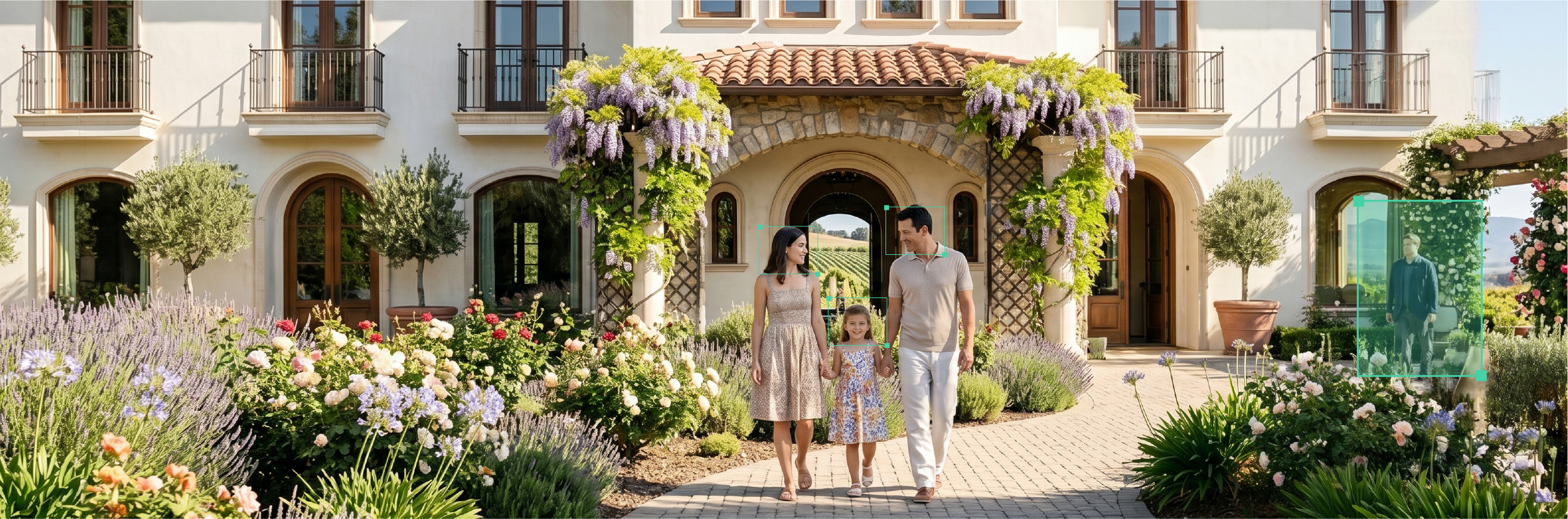
While threats to private residences are becoming more complex, effective protection is still built on clear, layered fundamentals. The goal is not to turn a home into a fortress, but to reduce exposure, increase awareness, and limit opportunities for targeting.
A strong residential security approach includes:
- Controlled perimeter awareness — understanding who is approaching the property and when, including deliveries, service providers, and unfamiliar activity
- Entry point hardening — reinforcing doors, gates, and secondary access points that are often overlooked
- Lighting and visibility strategy — eliminating blind spots around driveways, walkways, and side entrances
- Routine variation — reducing predictability in daily movements where possible
- Digital exposure management — limiting publicly available information that can reveal address, routines, or household members
- Alert-based monitoring systems — using tools that notify homeowners of unusual movement or activity in real time
- Response planning — ensuring there is a clear, immediate protocol for suspicious incidents or escalations
The most effective residential security strategies combine physical protection with awareness of external signals. Because in many modern cases, risk does not begin at the property line—it develops long before it reaches it.