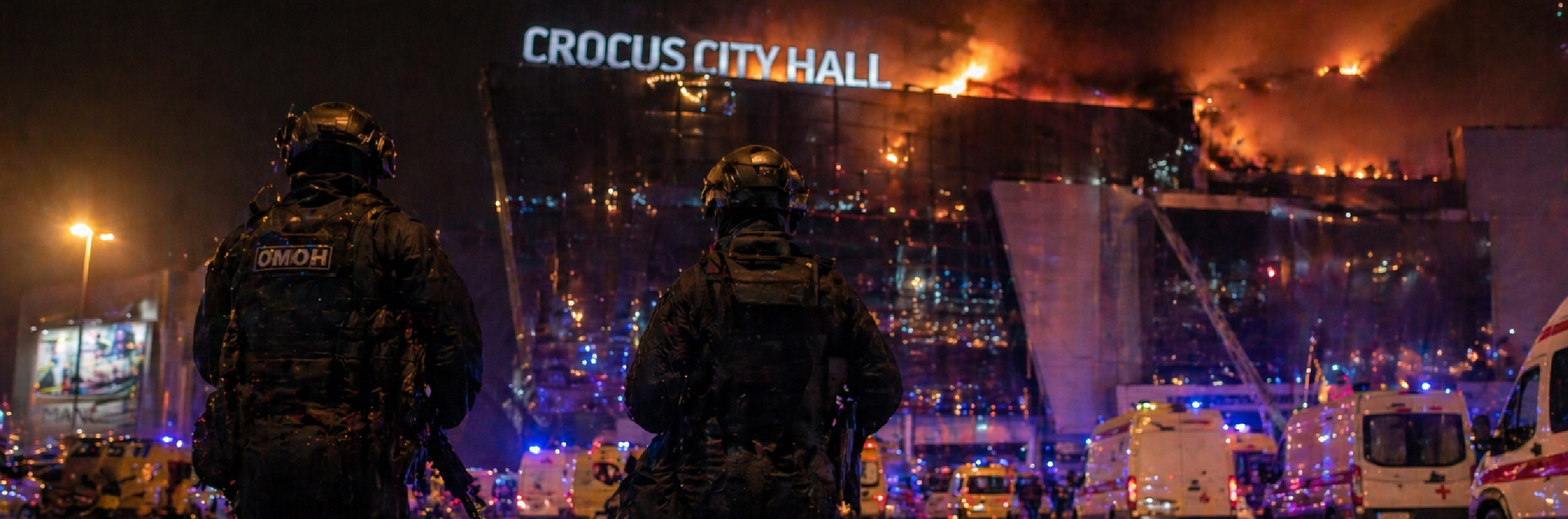
On March 22, 2024, armed attackers opened fire at Crocus City Hall, a major concert venue outside Moscow, during a live performance. The attack resulted in more than 140 deaths and dozens of additional injuries, making it one of the deadliest modern attacks on a civilian entertainment venue.
The attackers entered a crowded, high-capacity space during peak attendance, when movement control was limited and attention was focused on the event itself. The environment—large crowds, open seating flow, and multiple entry points—created conditions where response time was immediately constrained once the attack began.
What made the incident especially significant from a security perspective was not just the scale of violence, but the setting itself. Large entertainment venues are designed for openness, accessibility, and rapid entry and exit. These same characteristics, however, reduce friction for individuals intending to cause harm.
In the aftermath, attention has increasingly focused on how venues can maintain accessibility while still introducing earlier detection, behavioral monitoring, and coordinated response systems before threats reach the physical space.