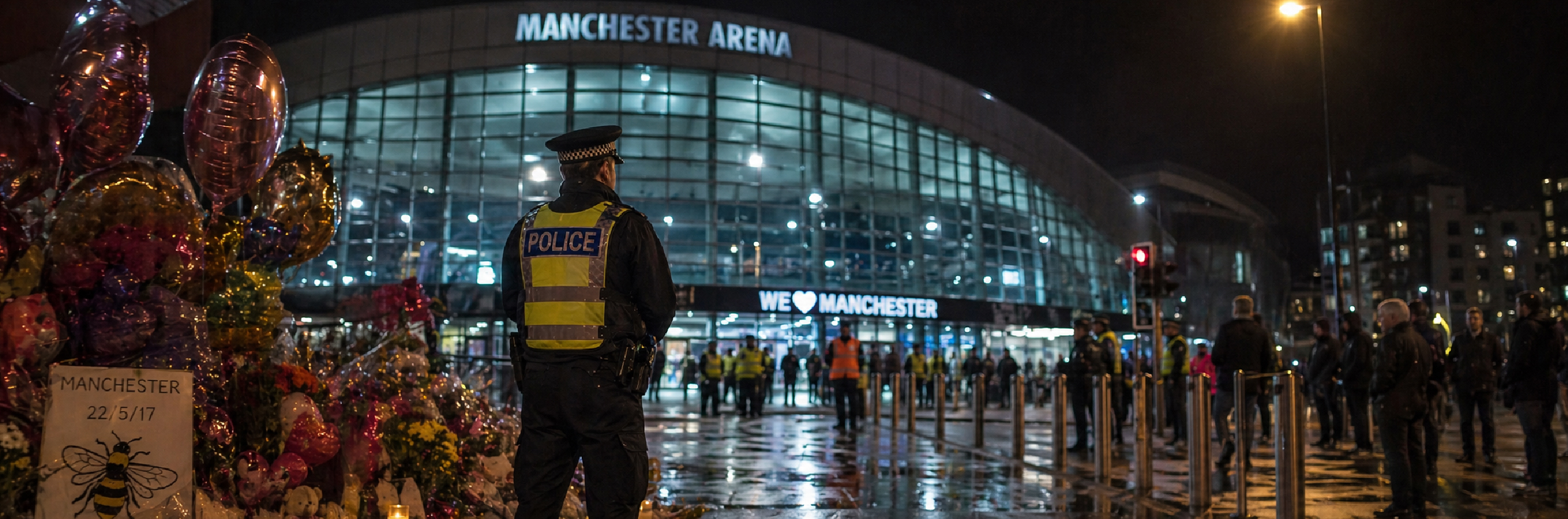
On May 22, 2017, a suicide bombing targeted the Manchester Arena at the conclusion of an Ariana Grande concert. Twenty-two people were killed, and hundreds were injured, making it one of the deadliest attacks on a music venue in modern history. The attacker detonated an explosive device in a public foyer area as attendees were exiting the arena, turning a crowded transition point into the focal point of the attack.
What made the incident particularly significant from a security standpoint was the timing and location. The attack did not occur inside the seated performance area, where screening and event security were concentrated, but in the unsecured public space at the venue’s exit flow. That transition zone—between controlled access and public dispersal—became the point of maximum vulnerability.
Investigations that followed highlighted how venue security planning had been heavily focused on entry screening and in-event monitoring, while exit conditions and external perimeter flow received comparatively less attention. The attacker exploited this gap, where crowd density was high, situational awareness was reduced, and movement was largely uncontrolled.
The Manchester attack reshaped global venue security thinking. It shifted focus beyond “securing the event” itself and toward securing the entire event lifecycle—arrival, entry, active attendance, and departure. It also reinforced the importance of coordinated intelligence sharing, rapid response capability, and early behavioral detection before individuals reach high-density public environments.
Today, it remains a reference point in how modern venues assess risk—not just inside the venue, but in the spaces immediately surrounding it, where large crowds are most vulnerable and least protected.