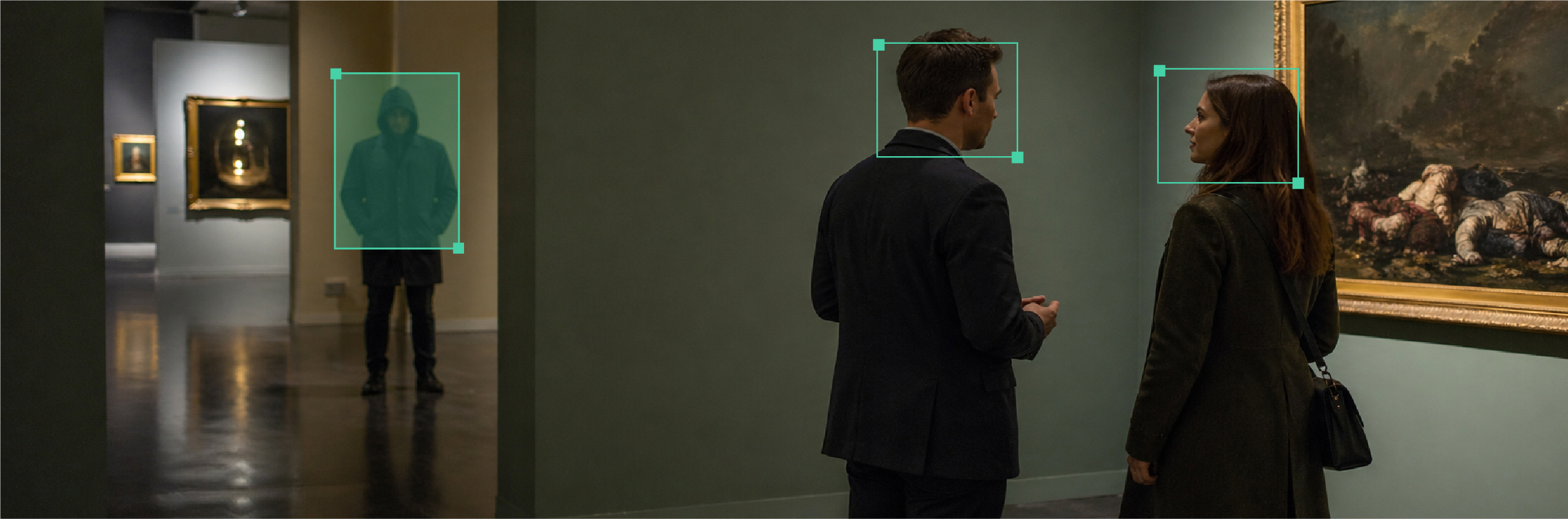
Museums, arenas, and live event venues operate in a uniquely complex security environment. They are expected to remain open, welcoming, and accessible—while simultaneously managing large crowds, valuable assets, and unpredictable exposure to threats. This balance requires a layered approach to security that goes beyond traditional guard presence or static surveillance.
Effective protection starts with recognizing that risk does not begin at the entrance. It develops across multiple stages—before arrival, during entry flow, throughout the event or visit, and during exit conditions. Modern security strategies are increasingly built around this full timeline rather than isolated checkpoints.
Core Security Measures for Modern Venues & Museums
- Controlled but unobtrusive entry management
Clear entry points with consistent screening protocols help establish baseline control without disrupting visitor experience. The goal is structured flow—not friction. - Layered surveillance coverage
Cameras and monitoring systems should not only capture activity but also provide full spatial coverage of high-density zones, perimeter edges, and transition areas such as lobbies and exits. - Behavioral awareness protocols for staff
Frontline staff and security teams are often the first to observe anomalies. Training should focus on recognizing unusual movement patterns, repeated presence without purpose, and behavior that does not align with the environment. - Crowd flow and density management
High-risk moments often occur when movement is most compressed—entry surges, intermissions, and exit periods. Proper spatial design and flow control reduce congestion-based vulnerability. - Pre-arrival intelligence awareness
Modern threat mitigation increasingly includes monitoring for indicators before individuals arrive on-site. This includes awareness of potential risks identified through external signals, reporting systems, or flagged behavior patterns. - Coordinated incident response planning
Security effectiveness is not only prevention—it is response readiness. Clear communication channels, escalation protocols, and cross-team coordination are essential when seconds matter.
The Shift in Modern Venue Security
The most significant change in recent years is the move away from reactive protection toward continuous situational awareness. Security is no longer confined to physical checkpoints—it is distributed across systems, people, and time.
Museums and venues that perform best under pressure are not necessarily those with the most visible security, but those that can identify risk earlier, respond faster, and maintain awareness across every phase of occupancy.
In high-traffic public environments, safety is not a single layer. It is a system operating continuously in the background—designed to protect without disrupting the experience it exists to preserve.